
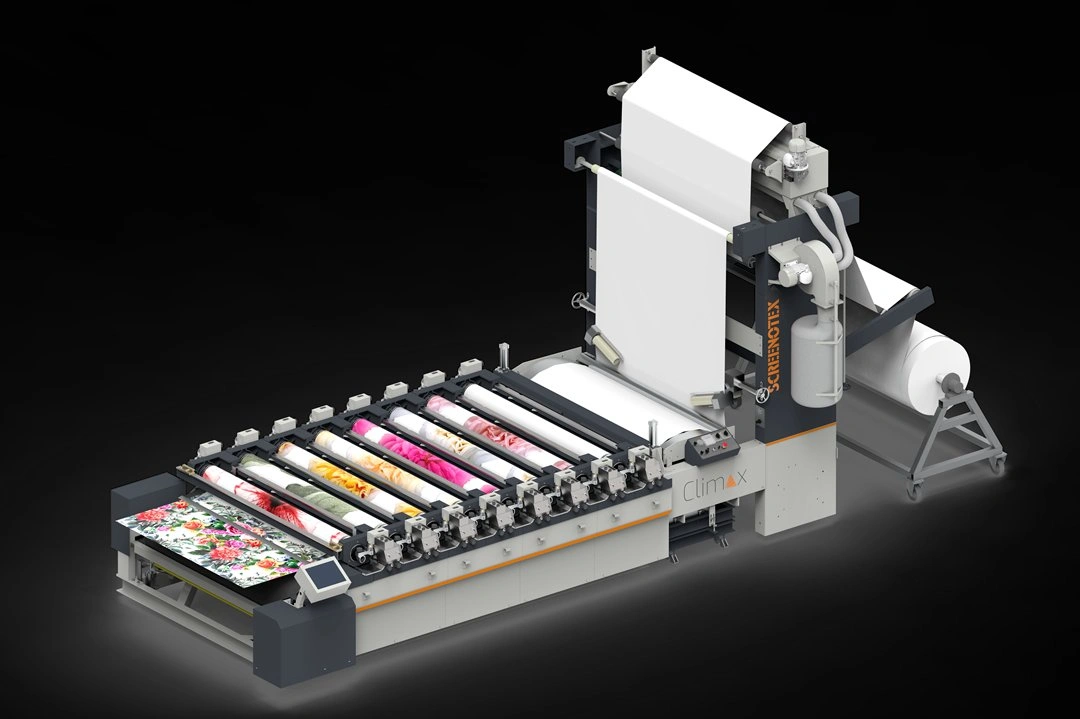
A textile printing machine purchase is not a transaction that gets made and forgotten. It is a commitment that shapes daily production for a decade or more. The machine specified today determines output capacity tomorrow, the year after, and for as long as it remains on the production floor. Getting it right matters in ways that extend well beyond the purchase price.
Rotary screen printing sits at the heart of continuous textile production for good reason. A cylindrical screen rotating continuously as fabric passes through it produces a genuinely uninterrupted printing process that flatbed systems cannot replicate. For manufacturers producing long runs of repeat patterns, this continuous operation is not just more efficient than flatbed printing. It is a different category of production capability.
But the technology is only as good as the machine implementing it, and the machine is only as good as the manufacturer behind it.
What Rotary Screen Printing Is Actually Good For
Continuous operation is the defining characteristic of rotary screen printing, and its primary advantage. Fabric feeds continuously through the machine, each colour station applies its colour in sequence, and printed fabric exits the other end without the start-stop cycle that flatbed printing requires between each print stroke.
For production environments running large volumes of the same design, this translates into genuine throughput advantages. The machine reaches operating speed and maintains it. Labour is focused on feeding fabric in, monitoring print quality, and managing output, rather than participating physically in each printing cycle.
Registration accuracy in rotary printing is achieved through mechanical precision in the screen drive systems, rather than through operator skill or machine-by-machine adjustment. Once the machine is set up correctly for a job, that registration holds through the run. Designs requiring tight colour-to-colour registration over long production runs are far better suited to rotary printing than to a process where registration depends on repeated manual positioning.
Why the Manufacturer Relationship Extends Beyond the Sale
The printing machine market in India spans a range of manufacturers at different capability levels, and the differences between them become most apparent not during the sale, but during the years of operation that follow.
A manufacturer with genuine engineering depth in textile printing technology understands why specific design choices in the machine matter for production outcomes: tension control systems that maintain consistent fabric handling across different fabric types, screen drive mechanisms that hold registration accuracy as components wear over time, ink circulation systems that keep print viscosity stable across a production run. These are engineering decisions that affect daily production performance, and they distinguish machines built with genuine textile production knowledge from those built to a cost specification. This is the standard we hold ourselves to at Screenotex, with over three decades of building textile printing machinery, installed across 1,800+ machines and 500+ customers, has meant learning firsthand which engineering choices actually hold up on the production floor over years of continuous use.
Spare parts availability is where this distinction becomes most practically important. A machine that cannot be maintained with readily available parts creates production risk that no initial purchase price saving justifies. A reputable rotary screen printing machine manufacturer in India maintains parts inventory and can support maintenance requirements years after the original purchase. A manufacturer who treats the after-sale relationship as secondary to the initial transaction creates dependency risk for the buyer. It's why Screenotex maintains an active spares and after-sales support structure for machines already in the field, not just for new orders.
Installation and commissioning support also matters more than equipment specifications tend to give it credit for. A machine that is not correctly installed and commissioned does not perform to its designed capability from the start. Problems that originate in poor commissioning can take months to diagnose correctly, and cost significantly more in lost production and quality issues than the commissioning support would have cost upfront.
Specifications That Actually Determine Fit
Printing width needs to match the fabric widths being processed and ideally allow some flexibility for future production changes. A machine specified at the minimum width for current production leaves no room for product range expansion.
Repeat size determines which design categories the machine can handle. Designs with specific repeat requirements cannot be printed on a machine whose available repeat sizes don't include that specification, worth checking explicitly against the actual design portfolio, rather than assuming standard repeat sizes will cover requirements.
Fabric compatibility across woven and knitted constructions, and across the range of fibre types in the production mix, determines whether the machine is versatile enough for the manufacturer's actual product range or only suitable for a subset of it.
Colour station count or the head count determines how many colours can be printed in a single pass. Additional passes reduce efficiency and create registration challenges. The maximum number of colours in your typical designs should be matched against the machine's colour station configuration.