
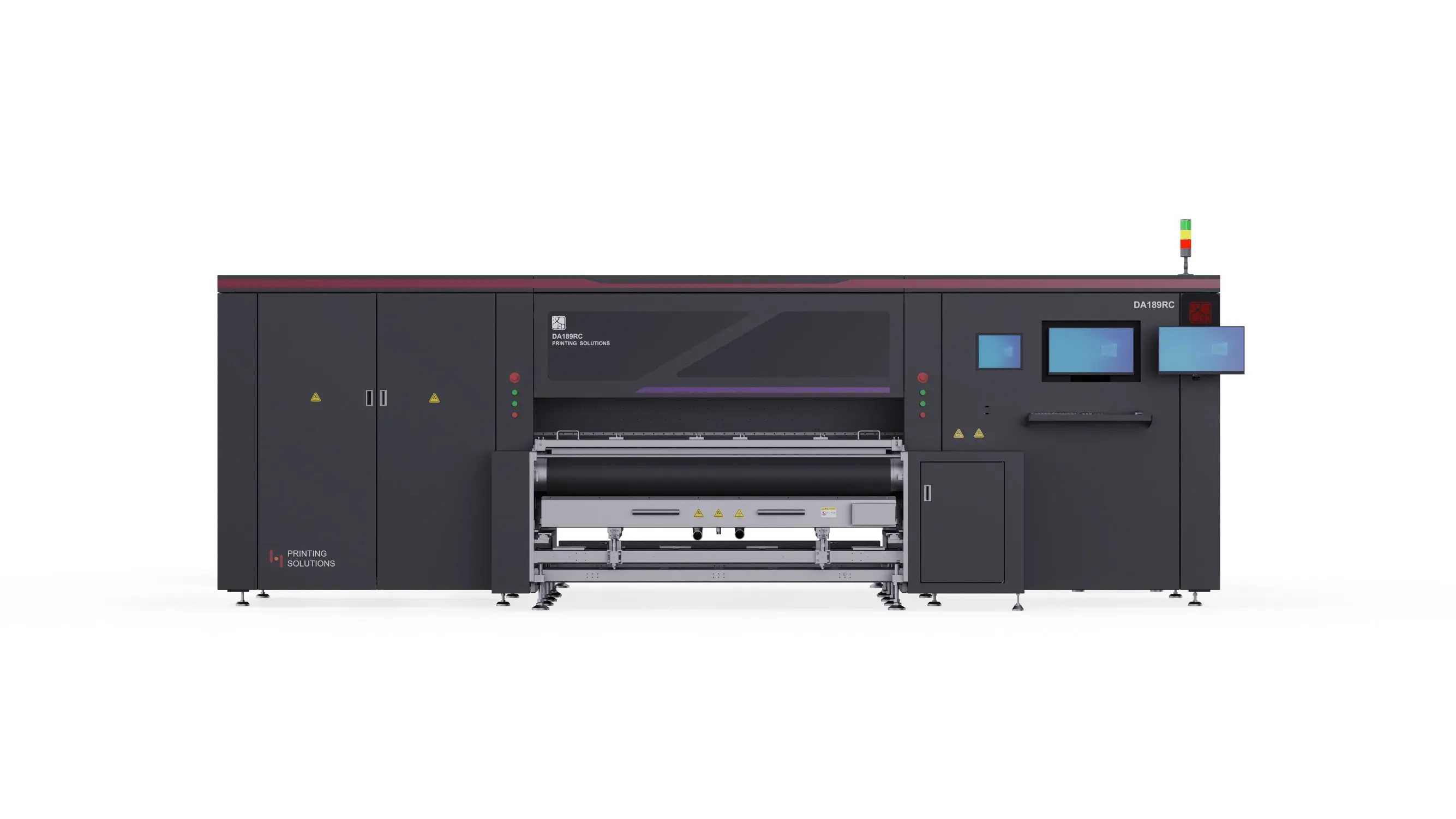
Digital printing has changed how textile mills and printing houses respond to the market. Shorter order runs, faster fashion cycles and growing demand for customised designs have made it difficult to rely on screen printing alone. A digital textile printing machine prints designs directly from a computer file onto fabric, with no screens, no engraving and almost no setup between designs.
For printers evaluating a digital textile printing machine in India, the real question is not whether digital printing works, but where it fits in their business. This guide explains how the technology works, where it delivers the most value, what drives cost per metre and how to choose the right machine.
What Is Digital Textile Printing?
Digital textile printing uses industrial inkjet print heads to place microscopic droplets of ink directly onto the fabric according to a digital design file. The design is colour-separated by software rather than by screens, so an unlimited number of colours, fine details, gradients and photographic effects can be printed in a single pass.
A complete digital printing process includes:
Fabric Preparation
The fabric is pre-treated to suit the ink system, for example padding with alkali and thickener for reactive printing.
Design & Colour
Artwork is prepared in RIP software, and colour profiles are matched to the fabric and ink.
Printing
Industrial print heads print the design directly onto the fabric.
Drying
The printed fabric passes through a dryer attached to the printer.
Fixation & Finishing
Colours are fixed by steaming and washing (reactive) or by curing (pigment), followed by normal finishing.
Key Advantages of Digital Textile Printing
- No screens or engraving: design changes are made in software, eliminating the cost and lead time of making a new screen set for every design.
- Unlimited colours and fine detail: gradients, shading and photographic effects that are difficult or impossible with screens can be printed easily.
- Fast sampling and short lead times: samples and strike-offs can be printed within hours, helping printers respond quickly to buyers.
- Economical short runs: with almost no setup cost per design, small orders and multiple design variations become profitable.
- Less waste: ink is applied only where needed, and there are no screen-washing or colour-kitchen losses from left-over paste.
Ink Systems: Matching the Ink to the Fabric
The ink system is one of the most important decisions when buying a digital printer, because it decides which fabrics you can print and which post-treatment you need.
Reactive Inks
For cellulosic fabrics. Bright colours and a soft handle with excellent wash fastness; requires pre-treatment, steaming and washing.
Pigment Inks
A simpler process of curing instead of steaming and washing. Ink cost is generally higher, so usually chosen for specific applications.
Acid Inks
For protein fibres and nylon.
Disperse & Sublimation
For polyester fabrics.
For most Indian cotton and viscose printers, reactive digital printing is the most widely used and most cost-effective choice.
Choosing the Right Digital Textile Printing Machine
Before investing, printers should evaluate the following:
Print Heads
Make, type and number decide speed, print quality and long-term reliability. Industrial-grade heads such as Kyocera are built for continuous textile production.
Head Configuration
More heads, for example 32-head instead of 16-head, print faster and suit higher production volumes.
Number of Colours
An 8-colour setup gives a wider colour gamut and better reproduction of difficult shades.
Print Width
Should match the fabric widths you regularly print.
Transport & Drying
A stable belt system and a properly matched dryer are essential for accurate registration and consistent output.
Ink Supply & Running Cost
Reliable local availability of ink and spares directly affects uptime and cost per metre.
Service & Support
Installation, operator training, colour-profile support and quick service response matter as much as the machine itself.
Understanding Digital Printing Cost per Metre
Digital printing has a different cost structure from screen printing. Screen printing carries a high setup cost per design (screens, engraving, colour kitchen and machine set-up) but a low running cost per metre. Digital printing has almost no setup cost but a higher running cost per metre, mainly from ink.
| Factor | Screen Printing | Digital Printing |
|---|---|---|
| Setup cost per design | High | Almost none |
| Running cost per metre | Low | Higher (mainly ink) |
| Best for | Long runs of one design | Short runs, sampling, frequent changes |
Digital printing cost per metre depends on:
- Ink consumption, which depends on design coverage and colour depth
- Ink price and the ink system used
- Fabric pre-treatment and post-treatment
- Machine productivity and utilisation
- Power, labour, maintenance and print-head life
Every printer has a different break-even point, so it is worth calculating it on your own order profile before investing.
Digital vs Screen Printing: Choosing Both, Not Either
Digital and screen printing are not competitors. They are complementary technologies:
Flatbed & Rotary
Remains the most efficient choice for high-volume production, special effects and very long runs.
Inkjet
Ideal for sampling, short runs, complex multi-colour designs and quick-turnaround orders.
Many successful printing houses use both. Designs are sampled and launched digitally, and once a design proves popular, bulk orders are moved to rotary or flatbed screen printing. For printers who want the best of both in a single line, hybrid printing machines combine digital printing with flatbed screen printing, for example a digital base print with screen-printed effects or spot colours.
Why Choose Screenotex for Digital Textile Printing
Our experience across flatbed, rotary, roto-flat and hybrid printing means we can advise printers objectively on where digital printing fits into their production, and on how it works alongside their existing screen printing lines.
Screenotex now offers industrial digital textile printers with Kyocera print heads in 16-head and 32-head configurations with 8 colours, for reactive and pigment printing, backed by local installation, training and service support from our Ahmedabad team.
Conclusion
A digital textile printing machine gives Indian printers the flexibility to handle short runs, fast sampling and complex designs profitably. The right choice depends on your fabrics, ink system, production volumes and the support available after installation. For many printers, the strongest strategy is to combine digital printing with screen printing, using each where it performs best.
To discuss which digital or hybrid printing solution suits your production, contact the Screenotex team.
Frequently Asked Questions
What is a digital textile printing machine?
It is an industrial inkjet printer that prints designs directly from a digital file onto fabric, without screens, using inks matched to the fabric type.
Which ink is best for cotton fabric?
Reactive ink is the most common choice for cotton, viscose and other cellulosic fabrics because it gives bright colours, a soft handle and excellent wash fastness.
What affects digital textile printing cost per metre?
The main factors are ink consumption and price, design coverage, fabric pre-treatment and post-treatment, machine productivity, power, labour and maintenance.
Is digital printing better than screen printing?
Neither is better in every case. Digital printing is more economical for short runs, sampling and complex designs, while screen printing remains more economical for long runs of a single design. Many printers use both.
What should I check before buying a digital textile printer in India?
Check the print-head type and number, colours, print width, ink system, dryer, local availability of ink and spares, and the supplier's installation, training and service support.
What is a hybrid printing machine?
A hybrid printing machine combines digital printing and flatbed screen printing in one line, so printers can add screen-printed effects or spot colours to a digitally printed design.