
Every printer knows the cost of dirty fabric: lint in the screen mesh, pin-holes under the squeegee, stoppages to clean screens, and fibre settling across the production floor. An infeed-mounted brushing unit solves this for a single printing line. But mills running several lines, or preparing large volumes of fabric ahead of printing, need cleaning capacity that keeps up with all of them.
That is the job of a high speed fabric brushing machine: a standalone cleaning machine that brushes, de-threads and vacuums fabric at industrial speed. This guide explains how it works, how it differs from an infeed unit, and what to check before buying.
What Is a High Speed Fabric Brushing Machine?
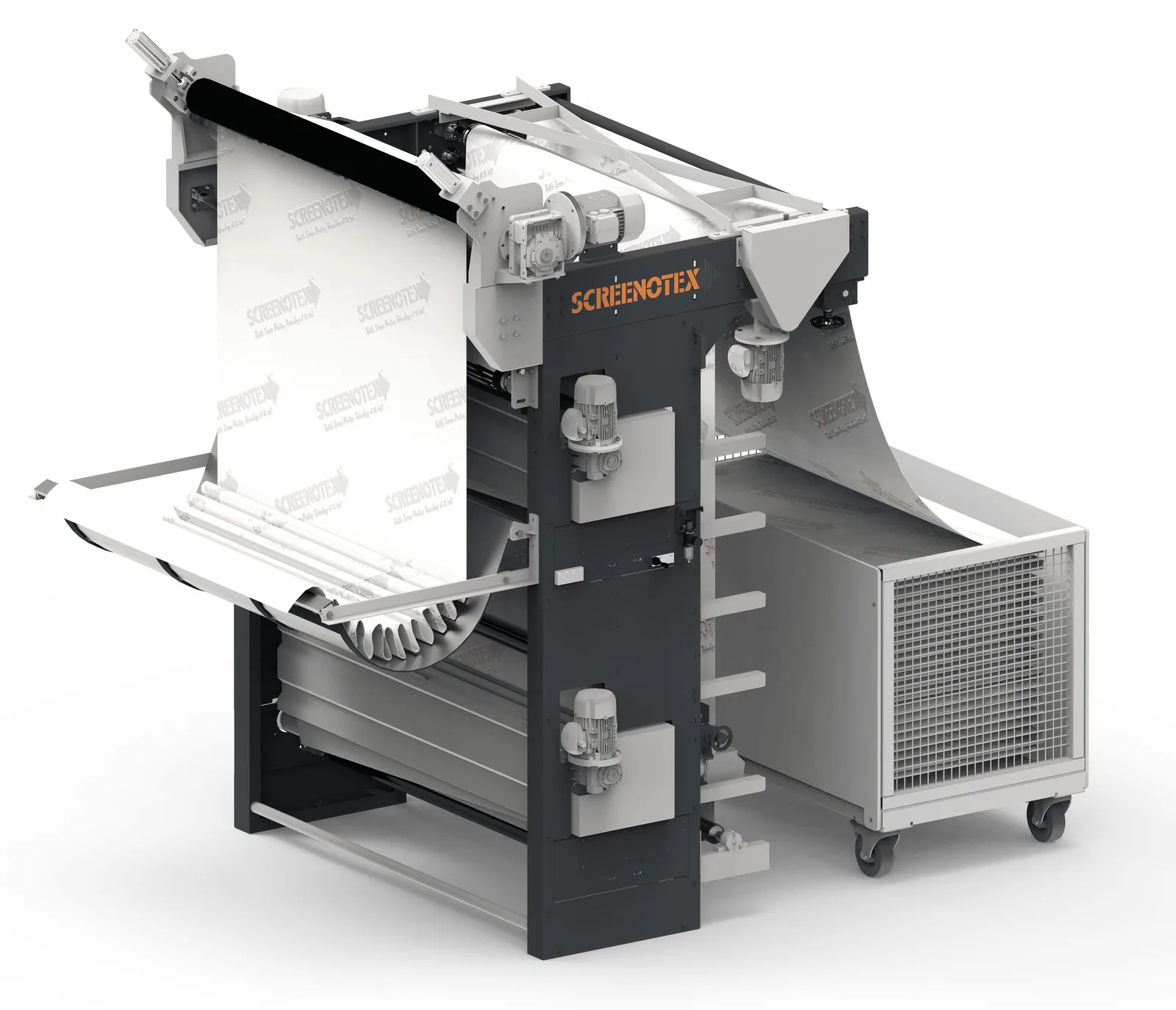
A high speed fabric brushing machine is a heavy-duty, high-throughput fabric cleaning system. It removes dust, lint, fluff and loose threads from the fabric surface before the fabric goes into printing, using rotating brush rolls and powerful suction.
Like the Screenotex infeed brushing unit, it cleans the fabric without changing the fabric itself. It is not a finishing machine for raising a pile or changing the handle of the fabric.
Infeed Brushing Unit vs High Speed Fabric Brushing Machine
| Infeed brushing & cleaning unit | High speed fabric cleaning unit | |
|---|---|---|
| Installation | Mounted on the infeed of one flatbed or rotary machine | Standalone machine, inline or ahead of printing |
| Max speed | Up to 3,000 m/hr | Up to 6,000 m/hr |
| Brushing | Dual brush rolls | Two brushing units, 4 brush rolls |
| Thread removal | Brushing and suction | Brushing, suction and a Velcro roll |
| Fabric spreading | Guide rolls | Positive-driven scroll roll plus cloth guiders |
| Outfeed | Directly into the printing machine | Six variants: free exit, scray, plaiting, small, big or switchable batching |
| Best for | Cleaning fabric just before one printing line | High-volume mills and fabric preparation for several lines |
Read more about the infeed unit in our article Fabric Brushing and Cleaning Unit: Why Clean Fabric Is the First Step to Flawless Printing.
How the Screenotex High Speed Unit Works
Infeed
A motorised infeed feeds the fabric, while guide rolls and cloth guiders align it edge to edge.
Scroll Roll Spreading
A positive-driven scroll roll flattens the fabric and removes tucks and folds before brushing.
Dual Brushing
Two brushing units, each with two positive-drive brush rolls, loosen dust and lint from the fabric.
Velcro Roll & Suction
A Velcro roll picks up loose threads the brushes miss, while centrifugal blowers pull particles into sealed filter bags.
Outfeed
Clean fabric leaves freely, or goes to a scray, plaiting or batching device.
Why Speed Matters
A cleaning machine should never limit production. At up to 6,000 metres per hour, the Screenotex high speed unit runs at roughly twice the speed of standard cleaning units, so one machine can prepare fabric for high-speed printing lines without slowing them down.
Speed also matters for print quality. As printing speeds rise above around 3,000 metres per hour, the risk of screen choke-up from lint rises with them. Thorough cleaning at high throughput keeps fast lines running without frequent stops to clean screens.
Industrial-speed fabric cleaning, so the cleaning step never becomes the bottleneck.
Key Features
- Dual brushing units: four positive-drive brush rolls for thorough contact cleaning.
- Positive-driven scroll roll: spreads the fabric evenly to prevent uneven cleaning.
- Velcro roll: removes loose threads that brushing alone can miss.
- Heavy-duty centrifugal blowers: create negative pressure across the full fabric width.
- Dual dust collection filter bags: two sealed chambers with access doors for easy maintenance.
- Cloth guiders and guide rolls: keep fabric tracking straight and protect edges.
- All fabric widths supported: configured to your working width.
Six Outfeed Options
The unit is available in six outfeed configurations, so it fits the way your fabric moves to the next process:
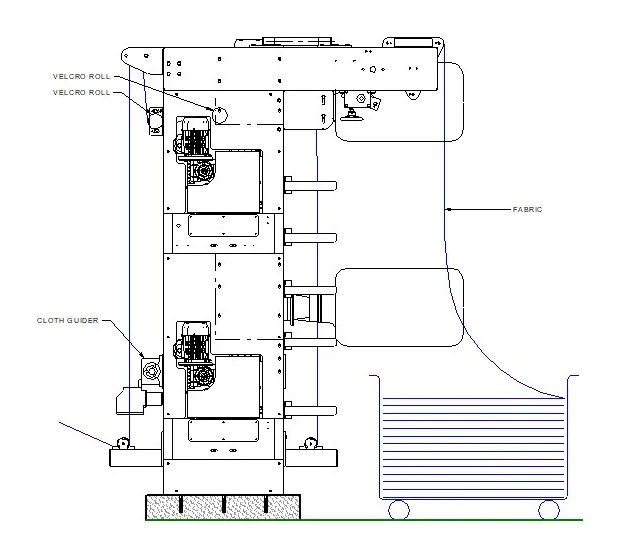
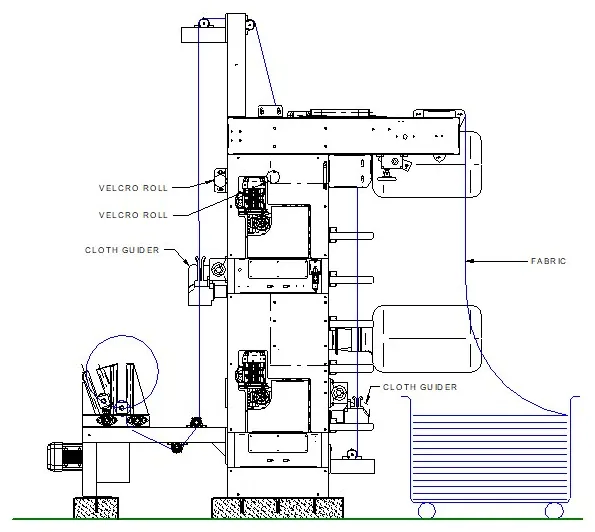
Normal Unit
No outfeed attachment. Built for inline integration with the next machine.
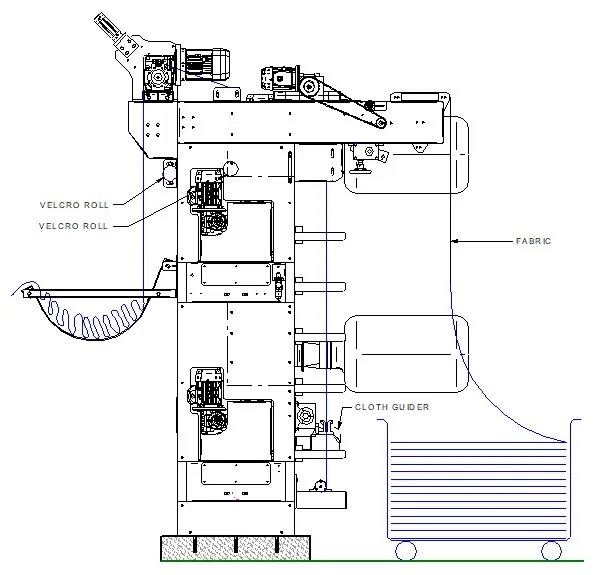
Scray Unit
Tension-free fabric accumulation at the outfeed, for synchronising with downstream machines.
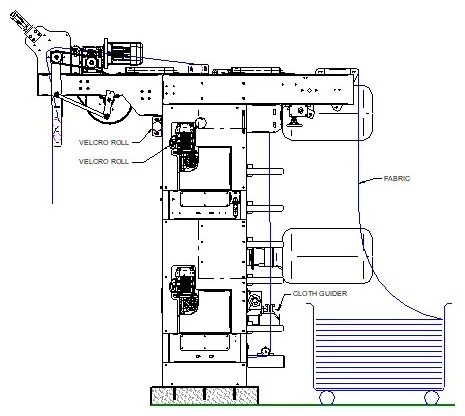
Plaiting Unit
Folds fabric in even layers into a trolley. Suits delicate, stretch and open-width fabrics.
Small Batching
Compact roll winding for short to medium runs.
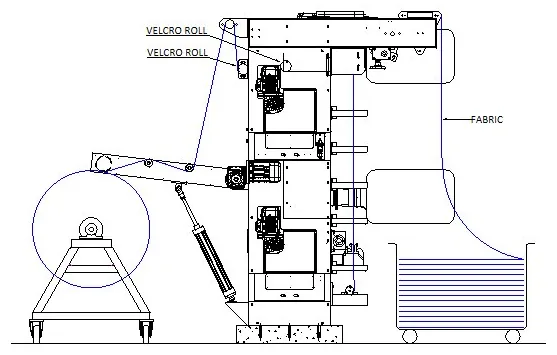
Big Batching
Heavy-duty winding for large-diameter rolls and long runs.
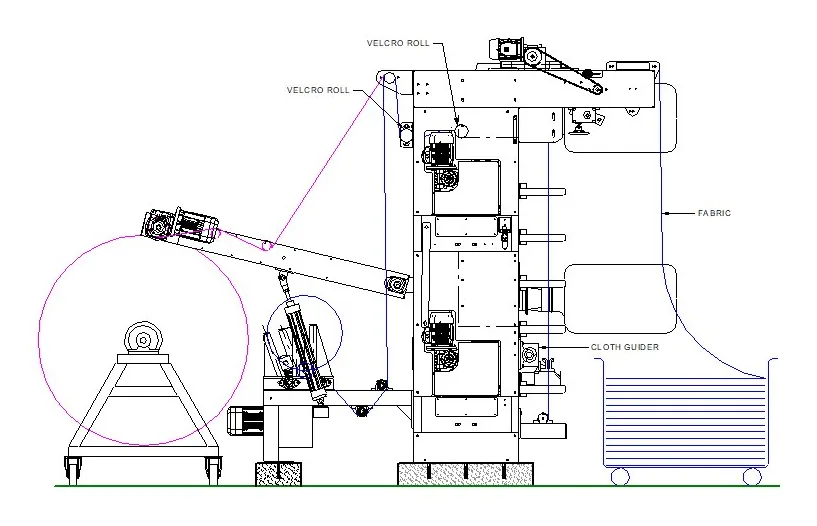
Small & Big Batching
One unit that switches between small and big batching, for mills with varying batch sizes.
Benefits for Textile Mills
Fewer Screen Choke-Ups
Removing lint and threads before printing reduces mesh blockage and extends screen life.
Fewer Print Defects
Clean fabric means fewer lint- and fibre-related defects on the printed fabric.
Less Downtime
Fewer stops to clean screens on high-speed printing lines.
Healthier Workplace
Fibre is sealed in filter bags instead of floating in the air.
Flexible Handling
Six outfeed variants to suit your fabric and workflow.
What to Check Before Buying
- Rated speed against the speed of your printing lines
- Number of brush rolls, and whether there is a dedicated thread-removal roll
- Suction capacity and dust collection, not brushing alone
- Fabric spreading and guiding, to avoid folds and edge damage
- The right outfeed for your fabric and workflow
- Ease of maintenance and access to the filter bags
- Installation support and spare parts from the manufacturer
Conclusion
A high speed fabric brushing machine gives high-volume mills clean fabric at the pace their printing lines demand. With dual brushing, a Velcro thread-removal roll, heavy-duty suction and six outfeed options, the Screenotex High Speed Fabric Cleaning Unit cleans up to 6,000 metres per hour, protecting screens and print quality without slowing production.
To learn more, explore the Screenotex High Speed Fabric Cleaning Unit or contact our team.
Frequently Asked Questions
What is a high speed fabric brushing machine?
It is a standalone fabric cleaning machine that removes dust, lint and loose threads from fabric at high speed, using brush rolls, suction and, on the Screenotex unit, a Velcro thread-removal roll.
How fast is the Screenotex high speed fabric cleaning unit?
It runs at up to 6,000 metres per hour.
How is it different from the infeed brushing and cleaning unit?
The infeed unit mounts on one printing machine and runs at up to 3,000 m/hr. The high speed unit is a standalone machine with two brushing units, a Velcro roll, a scroll roll and six outfeed options, running at up to 6,000 m/hr.
Does brushing damage or change the fabric?
No. The machine only cleans the fabric surface. It is not a finishing brusher used to raise a pile or change the fabric's handle.
Which fabrics can it clean?
It is configured for all fabric widths. The plaiting and scray variants suit delicate, lightweight, stretch and open-width fabrics.
How is the collected dust handled?
Heavy-duty blowers draw the dust and fibre into two sealed filter bags with access doors, which are cleaned during routine maintenance.